
Menu
0
Panoramic Sunroof Cracks: Can They Be Repaired or Only Replaced
Modern automotive design has shifted dramatically toward open, light-filled cabins. Once a premium feature reserved exclusively for flagship luxury sedans, the panoramic sunroof has become a staple across SUVs, electric vehicles, and sports cars alike. These expansive glass roofs offer an unparalleled aesthetic, transforming the driving experience by connecting passengers with the world above. However, this design evolution comes with a significant compromise: vulnerability. When a stray stone from a highway, a falling tree branch, or sudden thermal stress impacts this massive expanse of glass, the results can be devastating. If you find a crack stretching across your luxury roof glass, you are likely facing a stressful situation where standard auto glass replacement near me services must be evaluated under vastly different structural and mechanical principles than a basic side window fix.
Unlike standard windshields, panoramic sunroofs operate under vastly different structural frameworks. If you spot damage overhead, you are likely facing a stressful question: Can a panoramic sunroof crack be repaired, or does it require a complete replacement?
In this comprehensive guide, we will break down the engineering of panoramic sunroofs, evaluate the feasibility of repairs versus replacements, analyze the financial implications, and provide a clear roadmap for dealing with this luxury glass dilemma.
Understanding the Engineering of Your Panoramic Sunroof
To understand why dealing with a cracked sunroof is so complex, it is essential to look at the glass engineering itself. Your vehicle’s glass isn’t uniform; different types of glass are used for different purposes.
Tempered Glass vs. Laminated Glass
Historically, side windows and sunroofs were made exclusively from tempered glass. Tempered glass is treated with intense heat and rapid cooling to increase its strength. When it reaches its breaking point, it is engineered to shatter completely into thousands of tiny, relatively harmless pebble-like pieces rather than sharp shards.
In recent years, many luxury manufacturers have transitioned to laminated glass for panoramic roofs. Laminated glass consists of two layers of glass bonded together by a vinyl interlayer (typically Polyvinyl Butyral, or PVB). This is the same type of glass used in your front windshield. If it impacts an object, the glass cracks but stays structurally intact because the fragments adhere to the internal plastic layer.
The Role of Roof Glass in Structural Integrity
A panoramic sunroof isn’t just a window to the sky; it is an integral component of your vehicle’s modern structural envelope. In a rollover accident, the roof pillars and the glass structure prevent the cabin from collapsing. Furthermore, panoramic systems feature complex tracks, rubber seals, drainage tubes, and electric motors designed to tilt, slide, and shade the glass smoothly.
Because the system is dynamic (it moves) and structural (it bears weight and resists twisting forces as the car turns), any damage to it introduces risks that do not apply to standard, static windows.
The Verdict: Can a Panoramic Sunroof Crack Be Repaired?
The short answer for the vast majority of luxury panoramic sunroof cracks is no—they almost always require a full replacement. While a tiny chip on a front windshield is easily fixed, roof glass presents unique challenges that render standard repair methods ineffective or unsafe. Let’s look closely at why repairs are rarely an option.
Why Standard Chip and Crack Repair Fails on Roofs
Why Standard Chip and Crack Repair Fails on Roofs
1. The Tempered Glass Problem:
If your panoramic roof is made of tempered glass and it cracks, it won’t just leave a line—it will instantly shatter into thousands of pieces, often raining down into the cabin. There is no such thing as “repairing” a crack in tempered glass; once the surface tension is compromised, the entire pane is ruined.
2. The Physics of Gravity and Pressure:
Windshields are set at an angle, allowing aerodynamic forces to push down and back against the frame. Sunroofs sit flat on top of the vehicle, meaning they experience severe aerodynamic lifting forces at high speeds, combined with the constant downward pull of gravity. Vibrations from the road traveling up through the chassis put immense twisting stress directly onto the roof frame. A repaired crack cannot withstand these structural forces over time.
3. The Complexity of the Mechanism:
If resin is injected into a crack near the edge of a moving panoramic pane, it can easily alter the microscopic clearance needed for the panel to slide into its tracks. This can jam the electric motors, tear the weatherstripping, or cause the glass to bind and shatter during operation.
The Exception: When is Repair Possible?
A repair might only be considered if the panoramic roof is made of laminated glass and the damage is restricted to a minor, superficial stone chip (smaller than a quarter) located dead-center on a non-moving panel, far away from any edge or track system.
If you notice minor pitting or a small chip, addressing it immediately using a professional windshield chip repair toronto service is vital before structural shifts turn that small pit into an unfixable, sprawling fracture. However, if that chip expands into a true line crack, the window for a safe repair immediately closes.
If you notice minor pitting or a small chip, addressing it immediately using a professional windshield chip repair toronto service is vital before structural shifts turn that small pit into an unfixable, sprawling fracture. However, if that chip expands into a true line crack, the window for a safe repair immediately closes.
The Real Danger of Ignoring a Cracked Sunroof
Because a panoramic sunroof replacement can be costly and time-consuming, some luxury car owners choose to delay the service, assuming that a crack that isn’t leaking isn’t urgent. This is a dangerous misconception. Leaving a cracked roof glass unaddressed creates several severe cascading issues:
1. Total Catastrophic Shattering
Glass is highly sensitive to temperature fluctuations. When your car sits out in the hot sun, the glass expands. When you turn on the cabin air conditioning, the interior surface rapidly cools and contracts. This thermal shock, combined with hitting a pothole or a speed bump, can cause a cracked panoramic roof to spontaneously shatter while you are driving at highway speeds, creating an immediate, severe safety hazard for everyone inside the vehicle.
2. Water Ingress and Electrical Ruin
Modern luxury vehicles are packed with sensitive electronics. Directly beneath your panoramic sunroof lies your vehicle’s primary cabin wiring harnesses, infotainment systems, premium leather upholstery, and electronic control modules.
Even if a crack appears superficial, it compromises the microscopic seal of the glass layer. Water tracking along the crack line will eventually find its way past the internal drainage system. A single undetected leak can cause thousands of dollars in electrical damage, lead to mold growth in the headliner, and permanently corrode internal structural brackets.
Even if a crack appears superficial, it compromises the microscopic seal of the glass layer. Water tracking along the crack line will eventually find its way past the internal drainage system. A single undetected leak can cause thousands of dollars in electrical damage, lead to mold growth in the headliner, and permanently corrode internal structural brackets.
3. Compromised Rollover Protection
In the event of an accident, a compromised roof structure loses its load-bearing efficiency. If the integrity of the panoramic glass panel is already weakened by an extensive crack, it cannot provide the designed resistance needed to support the vehicle’s weight in a rollover event, putting passengers at extreme risk.
4. The Replacement Process: What to Expect
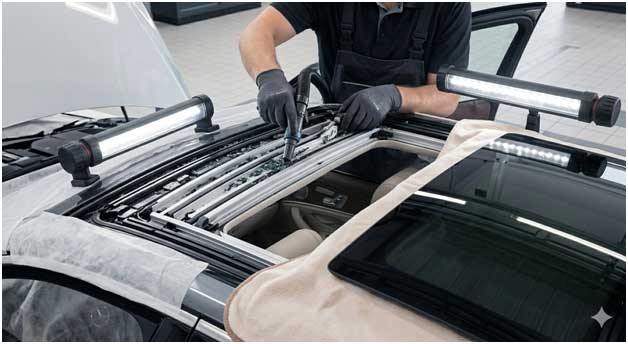
Replacing a luxury panoramic sunroof is vastly different from replacing a standard front or rear windshield. It is a highly technical, multi-step mechanical operation that should only be executed by certified professionals.
Analyzing the Financial Reality: Cost Breakdown
| Vehicle Category | Estimated Replacement Cost Range (CAD) | Key Cost Drivers |
|---|---|---|
| Standard Sedans / Compact SUVs | $1,000 – $2,000 | Smaller glass area, single-panel systems, simpler interior disassembly. |
| Premium Luxury Sedans & SUVs (BMW, Mercedes, Audi) | $2,500 – $4,500 | Multi-panel laminated glass, complex dual-motor tracks, integrated digital shades. |
| Exotic & Ultra-Luxury / EVs (Tesla, Porsche, Range Rover) | $4,500 – $7,000+ | Massive single-piece UV-coated glass panes, intensive calibration requirements. |
Navigating Insurance: Is It Covered?
The good news is that if you carry Comprehensive Insurance Coverage, a cracked panoramic sunroof is typically covered under your policy, as it falls under damage caused by road debris, storm damage, or vandalism.
However, because the cost of a panoramic replacement is so high, insurance companies will often dispatch an adjuster to inspect the vehicle to verify the damage before approving the claim. You will still be responsible for paying your comprehensive deductible (usually $250 to $1,000 depending on your policy). Given that total out-of-pocket costs regularly exceed several thousand dollars, filing an insurance claim for a panoramic roof replacement is almost always the most financially logical choice.
How to Choose the Right Specialized Service Provider
You should never trust a luxury panoramic sunroof replacement to a general mechanic or an uncertified roadside glass installer. Because this repair touches upon structural safety, advanced mechanical track synchronization, and delicate interior electronics, selecting the right service provider is crucial.
When searching for a qualified shop, keep the following criteria in mind:
When searching for a qualified shop, keep the following criteria in mind:
Certified Technicians:
Ensure the shop employs technicians certified by recognized bodies (such as the Auto Glass Safety Council) and possesses explicit experience dealing with your specific vehicle brand, whether it is an intricate European luxury SUV or a high-tech electric vehicle.
Adhesive Integrity:
Ask about the type of structural adhesives the shop uses. High-end glass requires premium, fast-curing polyurethane compounds that restore the vehicle’s structural rigidity back to factory standards.
Warranty Support:
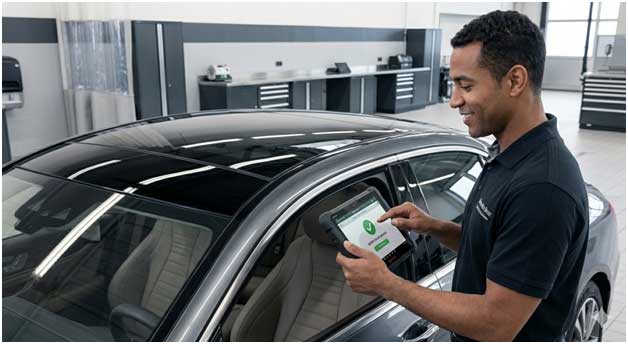
A reputable service provider should always back their workmanship with a robust warranty covering leaks, structural bonding failures, and wind noise.
If you are dealing with structural glass damage or require precision calibration within Ontario, consulting specialized local facilities like auto glass replacement north york will ensure that your vehicle’s safety features and glass structural ratings are completely restored.
Preventive Measures: Safeguarding Your Luxury Roof Glass
While you cannot always avoid a stray stone thrown up by a semi-truck, you can take practical steps to minimize the risk of a catastrophic panoramic sunroof failure and preserve the life of your luxury roof system.
Apply Panoramic Protective Film
Just as clear bras protect your front bumper, specialized multi-layer exterior glass protection films are available for panoramic roofs. These optically clear films absorb the kinetic energy of stone impacts, dramatically reducing the likelihood of the underlying glass cracking.
Regularly Maintain Seals and Tracks
A bound or dirty track system places immense mechanical stress on glass panels during operation. At least twice a year, open your sunroof completely and clean out any leaves, pine needles, or road grime from the tracks. Apply a high-quality, non-greasy silicone lubricant to the sliders.
Practice Smart Parking Habits
Whenever possible, park your vehicle in a covered garage or structure. This shields the massive glass roof from the damaging impact of acorns, falling branches, sudden hail storms, and intense thermal cycling caused by direct solar exposure.
Maintain a Safe Following Distance
Most highway stone chips occur when tailgating heavy construction vehicles, dump trucks, or large commercial trailers. By maintaining a generous following distance, you give flying road debris time to lose its forward momentum.
Frequently Asked Questions (FAQ)
Can I drive my car with a cracked panoramic sunroof?
It is highly discouraged to drive long-term with a cracked panoramic sunroof. While laminated glass may hold its shape temporarily, the structural stresses of driving (potholes, wind pressure, chassis twisting) combined with temperature changes can cause the crack to spread unexpectedly or cause tempered elements to shatter entirely, posing an immediate hazard.
Why can’t a technician just patch a long crack in a panoramic sunroof like they do on a windshield?
Windshields are set at a fixed angle and supported uniformly by the vehicle frame on all four sides. Panoramic sunroofs sit completely horizontal, experience intense vertical lifting pressures at highway speeds, and are subject to movement on mechanical tracks. A resin repair cannot withstand these constant gravitational, structural, and mechanical stresses.
How long does a full panoramic sunroof replacement take?
Unlike a standard windshield which can take about an hour, a panoramic sunroof replacement usually takes between 3 to 6 hours. This is because technicians must carefully drop the interior headliner, disconnect electronic sunshades and motors, clean out the drainage tracks, bond the new glass system, and execute electronic safety calibrations.
Will an aftermarket panoramic sunroof glass pane save me money?
Truly aftermarket alternatives for panoramic sunroof glass are exceptionally rare due to the incredibly precise engineering tolerances required by vehicle manufacturers. In nearly all cases, service providers must order an Original Equipment Manufacturer (OEM) replacement component directly from the dealership network to guarantee a proper fit and safe operation.
Will a cracked panoramic sunroof cause water leaks inside my cabin?
Yes, a crack significantly increases the risk of water leaks. Even if the crack appears superficial, it compromises the surface seal. Rainwater can seep through the crack line, overwhelm the internal drainage channels, and leak down into the car’s headliner, permanently damaging sensitive electrical harnesses, control modules, and luxury upholstery.